Site logo
Calendar IconSaturday, June 6, 2026
  • Home
  • All News
  • Crime & Security
  • Politics
  • Sports
  • Oil & Gas
  • Business
  • Education
  • MORE
    • Health
    • Agriculture
    • Entertainment
    • Regional
    • Features
    • Letters
    • Advertise
    • Trending
    • Video
  • facebook-black
  • instgram-black
  • tiktok-black
  • twitter-black
  • youtube-black
  • Home
  • Advertise
  • Get The App
  • Contact Us
Categories
  • All News
  • Sports
  • Crime & Security
  • Politics
  • Oil & Gas
  • Business
  • Education
  • Health
  • Agriculture
  • Regional
  • Features
  • Letters
  • Top Stories
  • Social
  • Classifieds
  • Culture
  • Entertainment
  • Environment
  • International
  • Top Story
  • Video
  • facebook-black
  • instgram-black
  • tiktok-black
  • twitter-black
  • youtube-black
Search Icon
Calendar IconSaturday, June 6, 2026
  • facebook-black
  • instgram-black
  • tiktok-black
  • twitter-black
  • youtube-black
  • HomeHome
  • TrendingTrending
  • VideoVideo
  • ContactContact Us
  • Home
  • Education
  • Pupil to Teacher ratio in Region Seven “too high”- Parents, Teachers
    Pupil to Teacher ratio in Region Seven “too high”- Parents, Teachers

    Education
    September 13, 2016
    Pupil to Teacher ratio in Region Seven “too high”- Parents, Teachers
    Pupil to Teacher ratio in Region Seven “too high”- Parents, Teachers
    FacebookTwitterPinterestEmailPrintWhatsAppRedditTelegramLinkedIn
    HandInHand-Top_Article-728x90

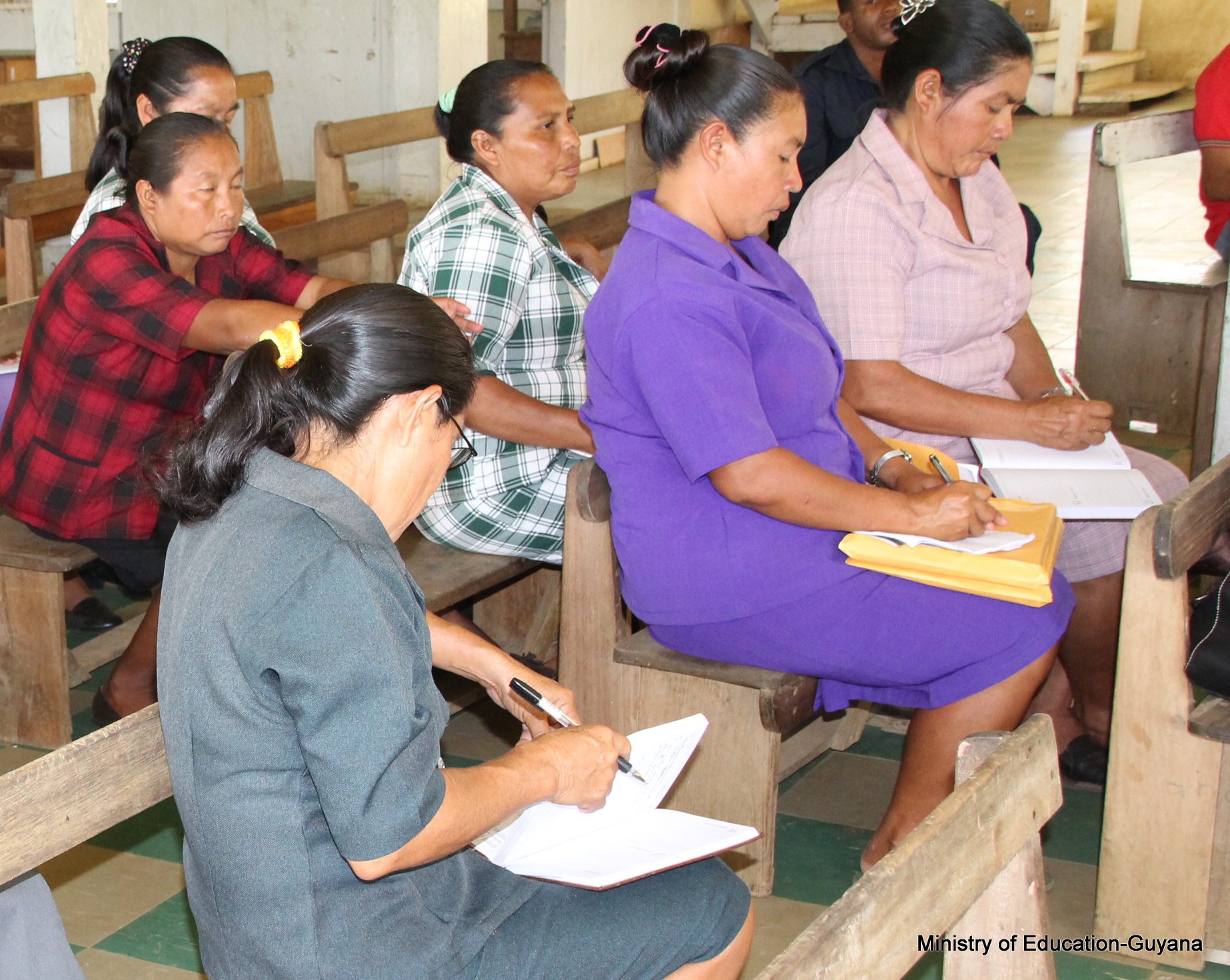
    One of the major concerns raised by residents and teachers from Region Seven in relation to the delivery of education in the Region includes a “too high” pupil-teacher ratio.


    According to a statement from the Ministry of Education, a team from the Ministry met with Head teachers, teachers, parents and officials from the Region 7 Department of Education recently to listen to their issues as the Commission of Inquiry (CoI) into the education sector continues.


    “Several speakers stated that the pupil-teacher ratio ‘was too high’ and did not allow for effective supervision,” the statement said.


    In this regard, a recommendation was made for the Nursery level the teacher-pupil ratio should be 1:15; Primary 1:20; and Secondary 1:30.


    Additionally, calls were made for the Ministry to bring secondary schools in the Region up to par with those on the coast by ensuring that the curriculum included technical subjects such as Home Economics, Wood Working, and Information Technology.


    Other recommendations included the need for welfare officers to cater to the needs of both teachers and students; disbursement of benefits before retirement age; introduction of Amerindian languages in the school’s curriculum; more support to address the high cost of living in the Region; need for special education teachers; and opportunities be presented to allow persons to pursue studies at the University of Guyana via the distance mode.
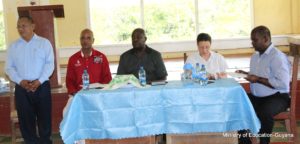
    From Right Commissioners Ramesh Persaud, Jeniffer Dewar, Ed Caesar; Clayton Hinds and R.Ed.O-Charkes Holmes
    From Right Commissioners Ramesh Persaud, Jeniffer Dewar, Ed Caesar; Clayton Hinds and R.Ed.O-Charkes Holmes

    The consultation was held at the Kamarang Primary School. Some of the schools and communities represented included Phillipai, Kako, Jawalla, Waramadong, Quebanang Wax Creek, Paruima, and Imbamadai.


    Region Seven is the first Hinterland Region that the COI has engaged so far.


    Meanwhile, Regional Education Officer (R.Ed.O), Mr. Charles Holmes, in highlighting a few of the successful initiatives implemented by the Ministry, said that the hot meal programme has been successful in the region.  He said that 11 of 16 schools have access to computer labs and plans are ongoing to ensure that the remaining schools have access by the end of 2016. Teachers in the Region are encouraged to utilise Information and Communication Technology to aid their work especially as it relates to the timely completion of reports and lesson plans.


    Public consultations are scheduled to be held in Region 1—Port Kaituma, Mabaruma, and Moruca from September 14-17, 2016.


    The Guyana Teachers’ Union, representatives from Religious Organisations, private education institutions, the University of Guyana, Cyril Potter College of Education and a number of Individuals have made recommendations to the Commission thus far.


    The COI commenced in April of this year and is expected to conclude in December 2016.

    Related Articles

    Sidebar – Top Ad

    Recent Posts

    Sidebar – Bottom Ad
    JUNE 2026
    MON
    TUE
    WED
    THU
    FRI
    SAT
    SUN
    1
    2
    3
    4
    5
    6
    7
    8
    9
    10
    11
    12
    13
    14
    15
    16
    17
    18
    19
    20
    21
    22
    23
    24
    25
    26
    27
    28
    29
    30

    Subscribe to News Room for email updates on the latest posts.

    By subscribing, you accepted Our Policy

    Site logo

    News Room is a news outlet launched in 2016 and caters to persons interested in creative and intelligent journalism with a broad perspective. We are a daily news broadcast on E-Networks channel, E1, and our stories are also distributed via the devices closest at hand: mobile phones and tablets.

    Quick links

    • Home
    • All News
    • Crime & Security
    • Politics
    • Health
    • Letters
    • Sports
    • Oil & Gas
    • Business
    • Education
    • Agriculture
    • Features
    • Entertainment
    • Regional
    • Advertise
    • Get The App
    • Contact Us
    • Trending

    © 2026 Copyrights by News Room. All Rights Reserved.

    • facebook-black
    • instgram-black
    • tiktok-black
    • twitter-black
    • youtube-black
    • Privacy Policy
    • Term & Conditions