
 Saturday, June 6, 2026


 Saturday, June 6, 2026


Conflict: Tillerson would Write the Rules For Exxon’s Major Oil Find in Guyana
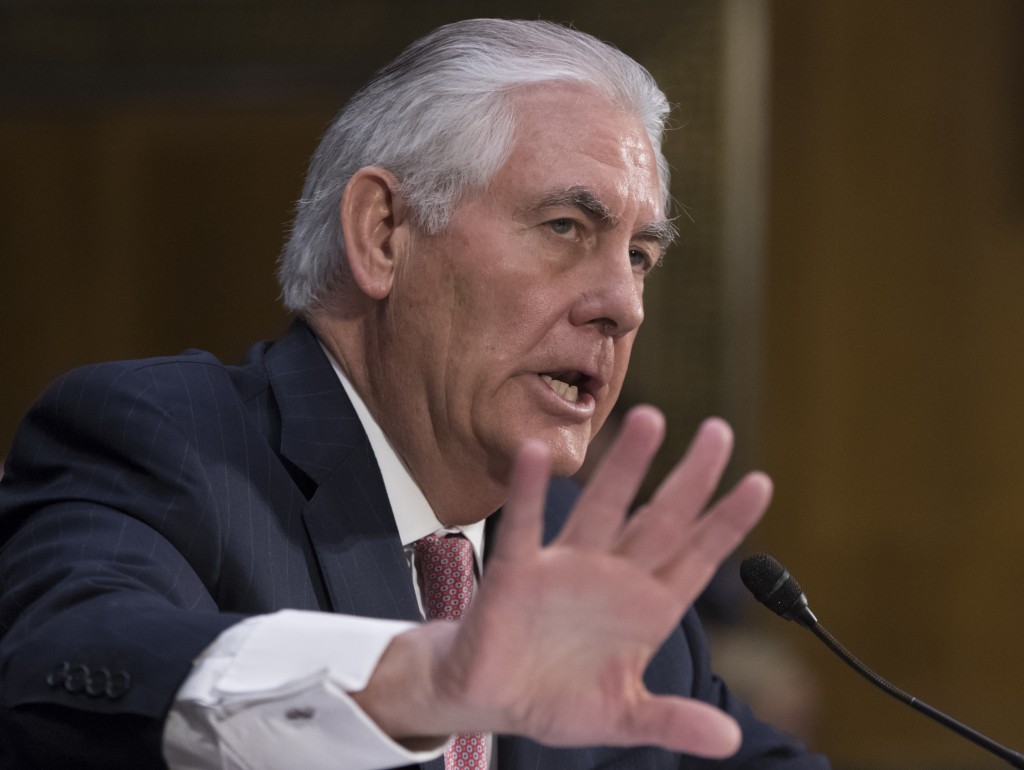


(Huffington Post) A little known program at the Department of State is now one of the biggest conflicts of interest sitting in the way of Rex Tillerson’s confirmation as Secretary of State.
The program is currently involved in writing oil and gas regulations for the country of Guyana, where Exxon has just announced another major oil find.
Exxon’s oil find in Guyana is currently estimated at over 4 billion barrels of oil – worth more than $200 billion. However, only 2 out of 20 offshore fields have been explored so far – which may mean far more oil is actually available.
There has never been large scale oil and gas extraction in Guyana, and the country has no real framework for regulating multinational oil companies like Exxon. The oil industry calls such places “frontier” locations. As the Washington Post writes:
“frontier” locations typically offer the most lucrative terms to foreign companies willing to invest. Guyana’s foreign partners stand to earn 60 to 65 percent of profits, a far larger share than what more established nations are willing to offer investors.
This makes Guyana a much larger and economically important find than Exxon’s holdings in Russia, at least in the near term.
State Department Oversight of Exxon in Guyana
The Guyanese government faces the prospect of regulating a company with an annual profit margin that is over 5 times larger than Guyana’s GDP. With no technical expertise in offshore oil drilling and no experience handling super-powered corporations, Guyana faces the real possibility of suffering the “resource curse,” in which a place with massive resource wealth is pillaged and left for broke by bad management and predatory colonial practices.
Interestingly, the State Department has recognized this dilemma. Under Secretary Clinton, the State Department set up a program called the Energy Governance and Capacity Initiative. The program aims to both promote fossil development and prevent the “resource curse” by providing “independent oversight“ of the oil and gas industry in nascent oil states. The program is currently helping the Guyanese government write profit sharing agreements, environmental regulations, and develop a strong rule of law to counterbalance corporate power.
There is righteous critique of this from people who say the main outcome of such a program would be to help Exxon profit from Guyana’s resources under the patina of rule of law. While that critique may have been valid while Hillary Clinton was Secretary of State, it will be an inarguable fact if Rex Tillerson assumes the Secretaryship.
It seems unlikely bordering impossible that Tillerson would, or even could recuse himself from his conflicted role. In his nomination hearing, Tillerson said he would recuse himself for one year from carrying out foreign policy that deals directly with ExxonMobil. Considering Exxon has dealings in in nearly a third of the World’s countries, a strict adherence to this promise would cripple the State Department.
Furthermore Tillerson will have a significant impact on State Department policy even if he does recuse himself from specific issues. As Secretary he will appoint and hire the staff of the Bureau of Energy Resources, which runs the EGCI. Under Clinton, David Goldwyn was the main negotiator for EGCI, and visited Guyana as part of the initiative. Goldwyn was Clinton’s right hand when it came to oil and gas diplomacy, helping her open Mexico‘s oil market and promote fracking worldwide. It stands to reason that Tillerson will fill that post with someone equally adept at integrating oil industry and State Department goals. They will at the very least represent their boss’s position while negotiating in Guyana. This means someone who shares Tillerson’s worldview will be responsible for prioritizing environmental and profit sharing regulations affecting Exxon. The unavoidable outcome of this is friendlier rules for Exxon, rules that prioritize production over over the environment, and corporate comfort over social justice.
Exxon in Guyana: a History of stirring conflict
There is a long backstory to Rex Tillerson and Exxon’s actions in Guyana. When Exxon initially announced this find in 2015, they knowingly caused an international incident, replete with troops amassing on borders and the outright threat of violence. This potential violence was stirred because Guyana’s neighbor, Venezuela claims ownership of the area on which Exxon found the oil.
Rex Tillerson and Venezuela have been enemies since Venezuela nationalized Exxon’s oil production there. Rex Tillerson took this as a personal affront. The drilling in the disputed waters off Guyana, was therefore seen as Rex Tillerson “getting even” with Venezuela.

