Site logo
Calendar IconSaturday, June 6, 2026
  • Home
  • All News
  • Crime & Security
  • Politics
  • Sports
  • Oil & Gas
  • Business
  • Education
  • MORE
    • Health
    • Agriculture
    • Entertainment
    • Regional
    • Features
    • Letters
    • Advertise
    • Trending
    • Video
  • facebook-black
  • instgram-black
  • tiktok-black
  • twitter-black
  • youtube-black
  • Home
  • Advertise
  • Get The App
  • Contact Us
Categories
  • All News
  • Sports
  • Crime & Security
  • Politics
  • Oil & Gas
  • Business
  • Education
  • Health
  • Agriculture
  • Regional
  • Features
  • Letters
  • Top Stories
  • Social
  • Classifieds
  • Culture
  • Entertainment
  • Environment
  • International
  • Top Story
  • Video
  • facebook-black
  • instgram-black
  • tiktok-black
  • twitter-black
  • youtube-black
Search Icon
Calendar IconSaturday, June 6, 2026
  • facebook-black
  • instgram-black
  • tiktok-black
  • twitter-black
  • youtube-black
  • HomeHome
  • TrendingTrending
  • VideoVideo
  • ContactContact Us
  • Home
  • Politics
  • Fingerprint collection, eye scan for Venezuelans in Guyana on pause
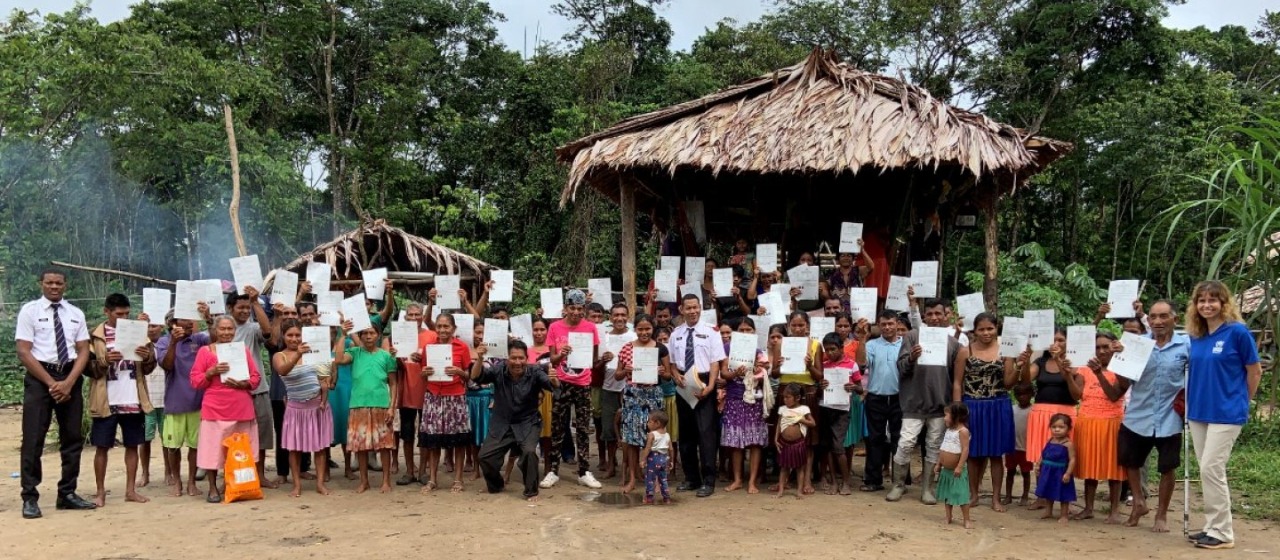
    Fingerprint collection, eye scan for Venezuelans in Guyana on pause

    Politics
    Regional
    October 26, 2021
    Fingerprint collection, eye scan for Venezuelans in Guyana on pause
    Fingerprint collection, eye scan for Venezuelans in Guyana on pause
    FacebookTwitterPinterestEmailPrintWhatsAppRedditTelegramLinkedIn
    HandInHand-Top_Article-728x90

    After being praised a year ago as the first country in the Caribbean and the Americas to roll out the United Nations Refugee Agency’s (UNHCR’s) “PRIMES” system to collect key data including biometric information from people forced to flee Venezuela, the project in Guyana has hit a snag.

    In 2019, the United Nations Refugee Agency (UNHCR) had begun the digitisation of the identities of thousands of Venezuelans in Guyana, the latest estimate suggesting over 23,000.

    By the end of February 2020 some 2,000 Venezuelans were registered through the biometric registration system called PRIMES –  Population Registration Identification Management Eco System.

    It included the collection of their fingerprints, iris scans, photographs and the digitisation of other information the government usually captured through a paper-based system for the granting of stay permits and extensions.

    But almost two years later, the digitisation remains on pause with UNHCR engaging the authorities at the Ministry of Home Affairs on the finalisation of a data-sharing agreement.
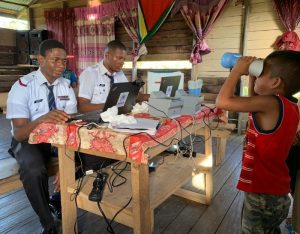
    Immigration Officers conducting biometric registration in Imbotero, Region One, Guyana in November, 2019 (Photo: UNHCR)

    As it is now, the digitised information is stored on servers belonging to UNHCR in Denmark’s capital, Copenhagen. The Guyana Government has limited access to the information until the agreement in finalised.

    The finalisation will also pave the way for the project to move forward.

    According to UNHCR’s Registration and Identity Management Officer Suenanica de Rozario when the project was piloted in Region One in 2019, suing a provisional agreement, among the 2,000 persons registered were Venezuelan Warraus.

    She said it was the first time that they had documentation with their name on it.  Those registration certificates are printed on secure paper with copies given to the individual and the Guyana government.
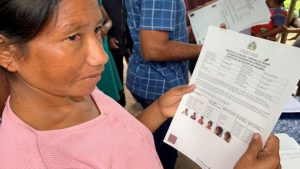
    A Venezuelan woman receiving her Government Household Registration Certificate, Yarakita, Region One, December 2019. (Photo: UNHCR)

    The front was a form of identification that would include the date those persons arrived in Guyana and their linkages to other Venezuelans here while the back was a replication of the government’s stay permits.

    When the project was put on hold because of the March 2020 elections, UNHCR had just started work in Region Seven, offering support to the government.

    The plan is to hand over the system to the government for immigration authorities to continue the digitisation.

    With the digitisation on pause, the News Room understands that manual registrations and extensions of stay continue.

    Efforts to secure a response from Home Affairs Minister Robeson Benn were unsuccessful.

    But according to the Head of UNHCR’s Office in Guyana, Cecilie Guerrero both the past and current governments seem keen on having the system in place.

    Related Articles

    Sidebar – Top Ad

    Recent Posts

    Sidebar – Bottom Ad
    JUNE 2026
    MON
    TUE
    WED
    THU
    FRI
    SAT
    SUN
    1
    2
    3
    4
    5
    6
    7
    8
    9
    10
    11
    12
    13
    14
    15
    16
    17
    18
    19
    20
    21
    22
    23
    24
    25
    26
    27
    28
    29
    30

    Subscribe to News Room for email updates on the latest posts.

    By subscribing, you accepted Our Policy

    Site logo

    News Room is a news outlet launched in 2016 and caters to persons interested in creative and intelligent journalism with a broad perspective. We are a daily news broadcast on E-Networks channel, E1, and our stories are also distributed via the devices closest at hand: mobile phones and tablets.

    Quick links

    • Home
    • All News
    • Crime & Security
    • Politics
    • Health
    • Letters
    • Sports
    • Oil & Gas
    • Business
    • Education
    • Agriculture
    • Features
    • Entertainment
    • Regional
    • Advertise
    • Get The App
    • Contact Us
    • Trending

    © 2026 Copyrights by News Room. All Rights Reserved.

    • facebook-black
    • instgram-black
    • tiktok-black
    • twitter-black
    • youtube-black
    • Privacy Policy
    • Term & Conditions