
 Saturday, June 6, 2026


 Saturday, June 6, 2026


Leaders pledge to save trees at COP26, while Indigenous people ask for land rights


This story was written by Vishani Ragobeer for Climate Tracker
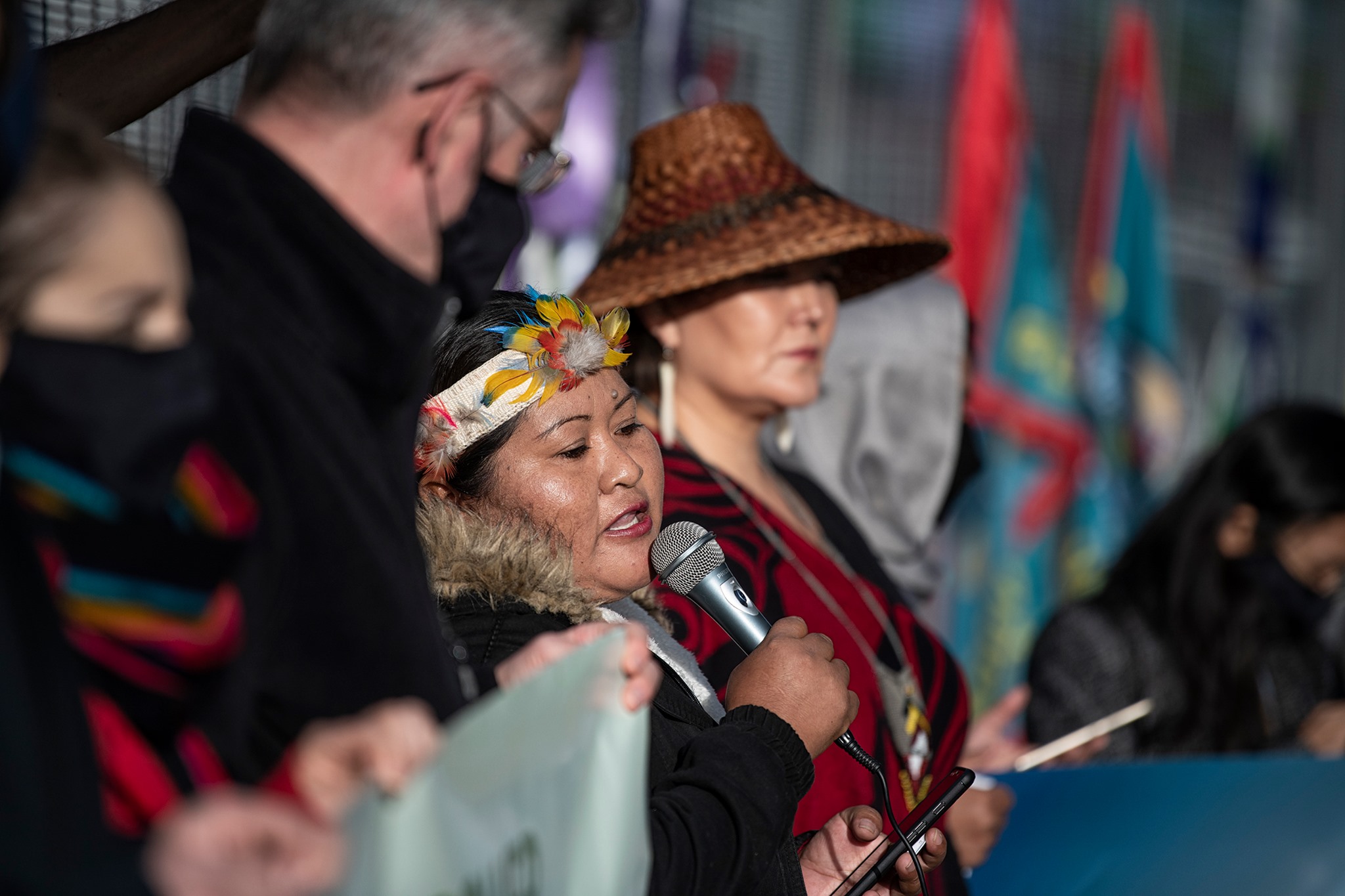
Immaculata Casimero, a Wapichan indigenous woman from Guyana, says her people have been advocating their land rights for more than 50 years. As global leaders pledge to save trees at COP26 in Glasgow, she argues land rights are even more important.
The Wapichan territory is found in part of the South Rupununi area of Guyana, found closer to northern Brazil. The land is communally managed by the village councils and the Wapichan people, who engage in small- scale farming, hunting, fishing and ranching. Some also engage in small-scale mining.
Because the Wapichan people depend on the environment for their sustenance and livelihood, Casimero explained that indigenous land rights are integrally linked to conservation and climate change mitigation.
“The land, the forests, everything is important to us as indigenous people,” Casimero tells Climate Tracker while attending the United Nations Climate Summit, COP 26, in Glasgow, Scotland.
Guyana’s forests store 21.8 billion tonnes of carbon, which means they are a major carbon sink. The country’s indigenous people, who are the main occupants of the forested areas, help to safeguard those forests from being cut down.
Casimero says, “We are doing the job without even having legal recognition so give us our titles, our extensions that we have been asking for.”
Without these land rights, challenges arise. An example of this is the granting of mining concessions which leads to deforestation.
The Amerindian Act of 2006 requires non-Amerindian (not indigenous) miners to seek permission from village councils for mining on titled Amerindian lands, as a way of protecting the territory of indigenous people.
However, because of slow progress in Amerindian land titling, the Guyana Geology and Mines Commission (GGMC) has continued to issue mining concessions for prospection and production over Amerindian customary lands.
With their land rights, however, Casimero explained that the indigenous people would be able to decide what activities can be permitted.
Forest protectors
The granting of land titles to Amerindian villages has been delayed for a number of years. In February, a budgetary allocation of GY $630 million (or US $ 3 million) was made to expedite the process.
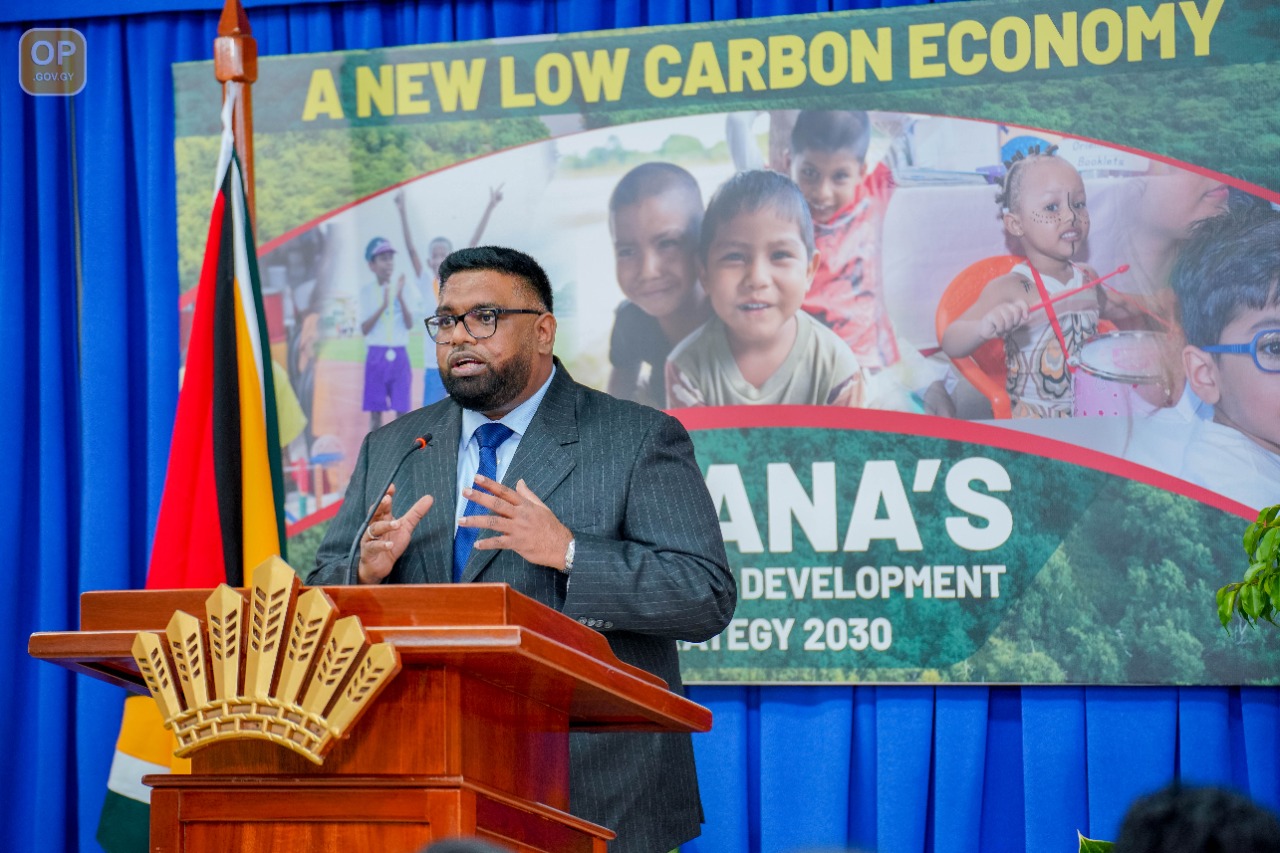
More recently, Guyana’s President Dr. Irfaan Ali announced an ambitious new development plan, through which Guyana will receive payments to keep forests intact. And, some 15% of those payments, will be invested in Indigenous people, including in land titling efforts.
The important role of indigenous people in conservation is something widely recognized globally. The Glasgow Declaration on Forests and Land Use, introduced during the first week of COP 26, even includes a mention to this.
This declaration, signed by more than 100 countries including Guyana, pledges to end deforestation by 2030 as part of climate mitigation efforts.
Importantly, too, the Declaration explicitly cited Indigenous peoples and local communities (IPLCs) as having a key role in forest stewardship. As such, some of the funds (though the amount is not yet clear) is earmarked to help support the IPLCs.
Professor Paulo Artaxo Neto, the co-author of the latest Intergovernmental Panel on Climate Change (IPCC) report, says that reducing tropical deforestation is a cheap, easy and fast way to cut the amount of carbon dioxide, a harmful gas, released into the atmosphere thus slowing global warming.
But Tony James, a Guyanese Wapichan leader who is also attending COP 26, is wary of lofty commitments made at the international level.
“What is the process? What is the system that will be used to ensure that the money comes down to indigenous people?” he asks during a three-minute interview with the Al Jazeera news at COP 26.
Casimero, on the other hand, emphasises that it is not about the money, but rather “more about caring for nature, caring for your environment and recognising that these are gifts to us. There is no amount of money that can buy breath,” she said.
Climate threats
The need for such global action to help mitigate climate change is all the more important for indigenous people who are on the frontline of climate change, according to the indigenous woman.
Earlier this year, in the Wapichan territory, unprecedented flooding caused by intense rainfall meant that indigenous people lost their crops- including cassava which is a ground provision that is the staple food of Guyana’s indigenous people.

