
 Sunday, June 7, 2026


 Sunday, June 7, 2026


To protect rice export, GRDB conducting comprehensive study on paddy bug
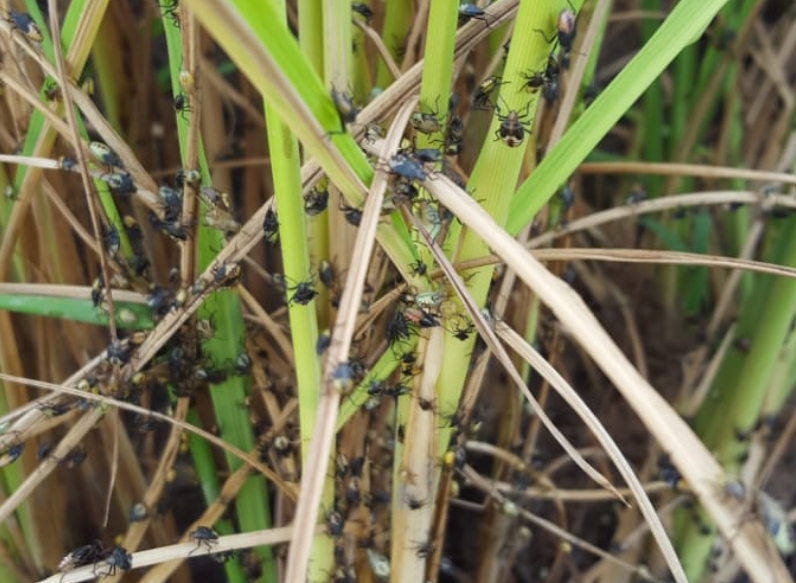


The Guyana Rice Development Board (GRDB) is conducting a study of paddy bugs to reduce their impact on rice cultivation here. This is being done to secure the country’s rice export, specifically to the European Union market, preserve the ecosystem and aid in food security.
GRDB is now focusing on how they can ensure the rice being produced, consumed and exported meet international standards and quality.
GRDB’s Plant Pathologist, Dr. Rajendra Persaud said the EU has been clamping down with legislation on safety limits of agrochemicals (pesticides) in rice and other imported food products.
The EU is currently Guyana’s largest export market for rice with a 48 per cent rate recorded in 2021. For the year thus far, the rate has already exceeded last year with 52 per cent.
“A lot of European countries are rejecting rice coming from different parts of the world with pesticide residue above what they term food safety limits and the EU being our major market, we should take score of that and put things in order that we are not affected by such regulations in the EU,” Dr. Persaud said while addressing GRDB’s Conference on ‘Pesticide residue in rice’. Officials from the rice industry, the Guyana National Bureau of Standard and the Pesticide Control Board were all in attendance. Two consultant specialists from neighbouring Brazil also attended the conference.
Dr. Persaud explained that the study is being done on the paddy bug because it is the most important rice pest.
“Because of this pest, rice farmers utilise insecticide as one of their main sources of control.”
But with the use of insecticide, pesticide residue or the trace of pesticide compound remains in the crop, water, soil, and air. This can pose serious constrain to a person’s health and the environment.
As such the EU have taken steps to put regulations in place to limit the use of pesticide.
Should Guyana’s rice export to the EU be affected, it would be devastating, Dr. Persaud said.
He related that GRDB is now looking at alternatives to control pests.
“Other than pesticides we need alternatives in terms of managing the paddy bug and so we have embarked on conducting a comprehensive study on the paddy bug in Guyana with the overall objective to study the paddy bug and develop strategies that will effectively reduce its economic impact on rice cultivation,” Dr. Persaud related. The study will re-examine host preference of the paddy bug and seek to identify the various species of the bug.
A National Monitoring and Surveillance Strategy was also established.
Meanwhile, GRDB is also evaluating new insecticides.
“We are also looking at the option of some biopesticides,” Dr. Persaud said.
Dr. Persaud further stated that samples of rice were sent to the CABI Center of Agriculture and Bioscience International in the United Kingdom for a detailed analysis.
The report from that analysis found the samples were discoloured as a result of several fungal and bacterial microorganisms.
Dr. Persaud explained that the samples were taken from “illegal” varieties of rice being cultivated in Regions Two, Three, and Five.

