
 Saturday, June 6, 2026


 Saturday, June 6, 2026


Border controversy: Venezuela’s claim that UK, not Guyana, should be party to court case dismantled
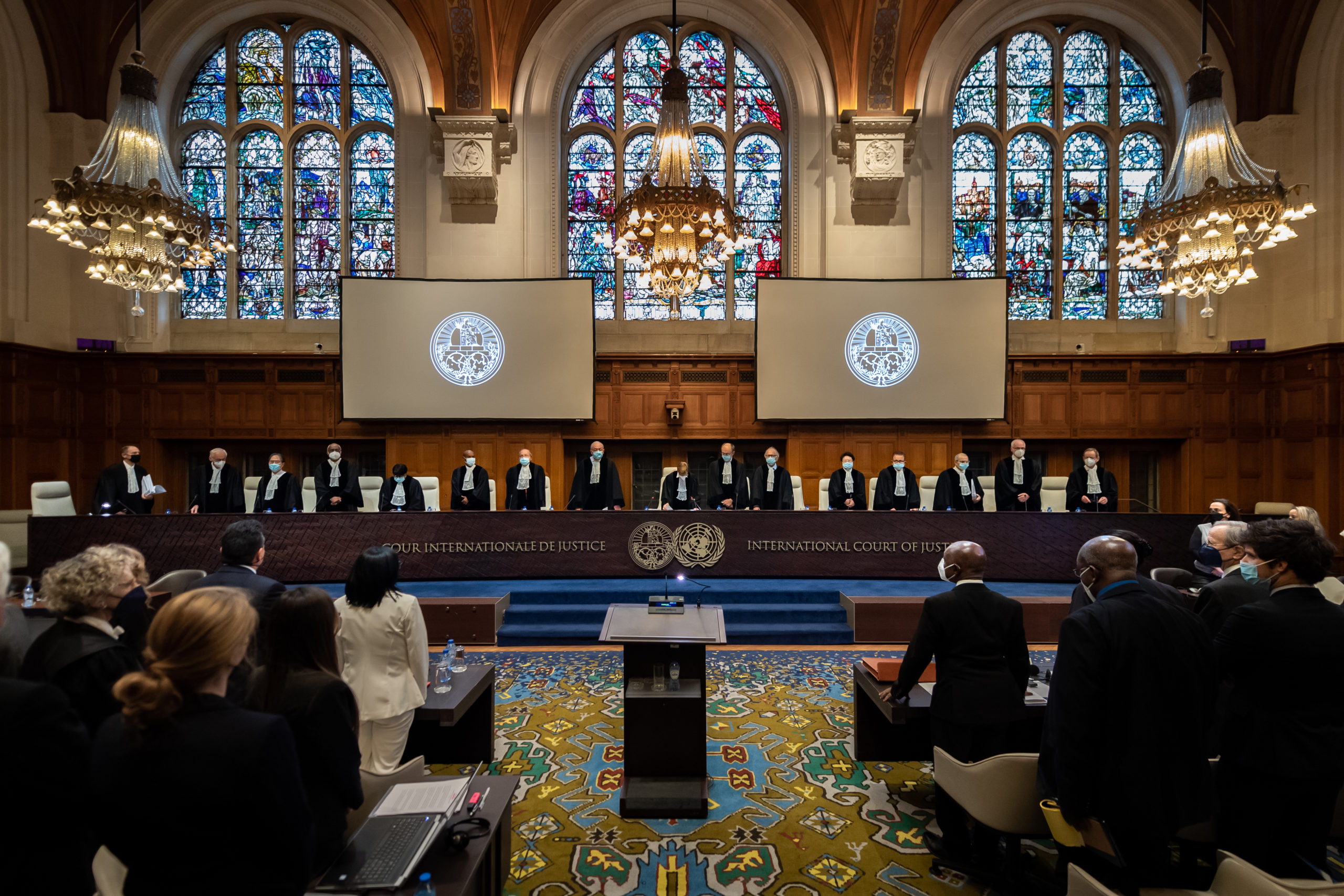


Deeming Venezuela’s arguments as “incoherent, legally misconceived and factually baseless,” the legal team representing Guyana before the World Court on Friday dismantled the argument that the United Kingdom (UK), not Guyana, should be party to the ongoing border controversy case.
Guyana’s lawyers participated in the first round of oral arguments at the International Court of Justice (ICJ) in Hague, Netherlands.
Their submissions came one day after Venezuela’s legal team presented that country’s arguments on why the world court should throw out the case filed by Guyana to settle the border controversy between the two countries.
The Spanish-speaking country argued that the UK should be a party to the border case given that the British government was party to the 1899 Arbitral Award that determined the land boundary between Venezuela and then British Guiana.
Guyana, independent from British rule since 1966, does not agree with this.
“Venezuela’s preliminary objections are incoherent, legally misconceived and factually baseless,” Professor Philippe Sands, a Professor of International Law at University College London and member of Guyana’s legal team, told the Court on Friday.
But what exactly makes Venezuela’s position so?
Professor Sands reminded the Court of the February 1966 Geneva Agreement which intended to resolve the controversy over the frontier between Guyana and British Guiana.
When Guyana became independent in May 1966, the UK no longer had a role in the settlement of the controversy. Based on Article IV of that Agreement, the UK gave its consent for the United Nations, and by extension the ICJ, to resolve the controversy.
“… if Venezuela is right, then it would seem to follow that any former colonial power, anywhere in the world, would retain a continuing legal interest in respect of any potential judicial determination for example of the boundaries of any of its former colonies were such determination turned in some someone on some impugned act of the former colonial power,” Professor Sands said.
But he believes that Venezuela is not right and that country’s argument offends the laws of succession and decolonisation given that Guyana is a sovereign state now.
He added, ““… Venezuela doesn’t truly regard the UK as an indispensable third party to these proceedings.
“(This is) a late attempt to derail the process, to delay this Court from delivering the impartial and authoritative ruling which will finally bring this controversy to a legal end.”
Attorney Paul Reichler, a member of the Bars of the United States Supreme Court and the District of Columbia and another member of Guyana’s legal team, also argued against Venezuela.
He said that the UK has no legal interest or obligation in the case that a ruling from the Court could possibly effect. Venezuela too did not provide specific examples of any potential British interest or obligation.
As such, the Guyana representative believes that there is no need for the Court to decline its jurisdiction in the case because of the absence of the UK. Therefore, the ‘Monetary Gold’ principle wherein the Court refuses to decide cases because parties are absent should not be invoked.
Adding further credence to his argument, Reichler reminded the Court of several Communiques issued by blocs that include the UK which back the Court’s jurisdiction in presiding over the matter.
The most recent example of this was the Communique issued at the end of the Commonwealth Heads of Government Summit in Kigali, Rwanda in June 2022. The 54-nation Commonwealth, which includes the UK, backed the legal route at the ICJ to bring a “peaceful and definitive” end to the Guyana/Venezuela border controversy.
These statements, he said, disavows any British legal interest in the validity of the arbitral award and the definitive land boundary established.
‘RES JUDICATA’ APPLIES
The other members of Guyana’s legal team who presented on Friday, Professor Pierre d’Argent and Christina L. Beharry, argued that the res judicata principle should apply to Venezuela’s belated preliminary objections that the World Court should not preside over the matter.
As per this principle, a matter that has been adjudicated before may not be pursued further by the same parties. Given that the World Court, in December 2020, ruled that it has jurisdiction over the case, it was argued that Venezuela cannot object now.
“… Venezuela asks for the exact opposite of what the Court decided in its judgement. It is therefore impossible to grant Venezuela’s request without violating the res judicata effect of your judgement.
“Guyana, therefore, respectfully submits that Venezuela’s objections are precluded and should be rejected by the court on this basis,” Beharry said.
After the Court determined that it has jurisdiction to hear the case in 2020, it ordered that Guyana file its Memorial on the merits of its case against Venezuela. Guyana did so on March 8, 2022.
When Guyana filed its Memorial, Venezuela filed preliminary objections to the admissibility of Guyana’s Application to the Court to determine the validity of the 1899 Arbitral Award on June 7, 2022.
In accordance with its rules, the Court suspended the proceedings on the merits until the determination by the ICJ as it relates to Venezuela’s preliminary objections.
Venezuela refused to participate in the legal proceedings before this and Guyanese stakeholders believe that these preliminary objections are meant to delay the Court’s ruling on the substantive matter: the border controversy.
Guyana is seeking to obtain a final and binding judgement that the 1899 Arbitral Award, which established the location of the land boundary between then British Guiana and Venezuela, remains valid and that the Essequibo region belongs to Guyana and not Venezuela.

