
 Saturday, June 6, 2026


 Saturday, June 6, 2026


Diabetic patients, amputees grateful for prosthetic capacity building programme
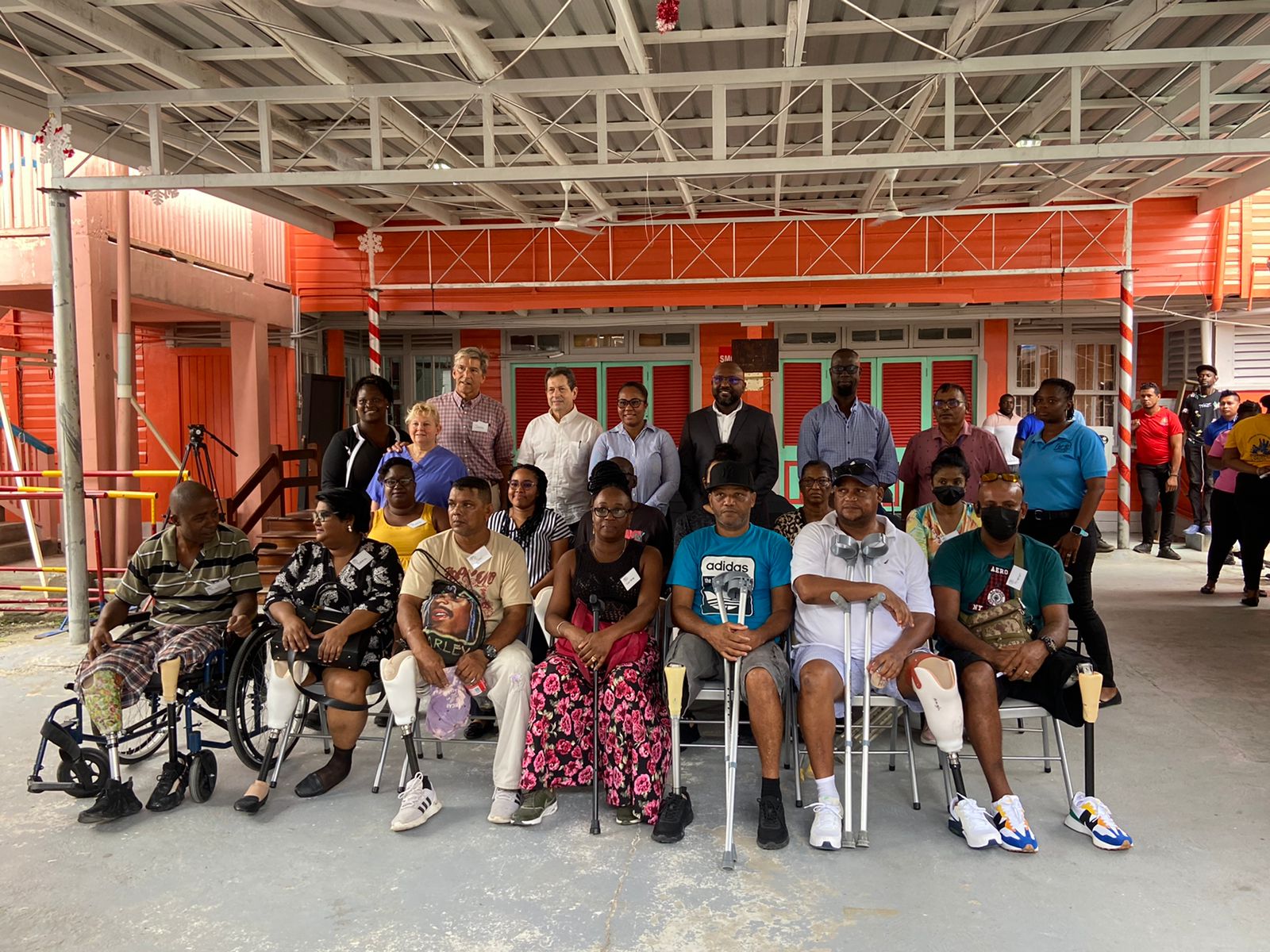


Over 30 amputees who seek physiotherapy at the Ptolemy Reid Rehabilitation Centre, Georgetown, this week received capacity-building training to strengthen their abilities to use prosthetics.
The training was conducted by Jon Batzdorff, a prosthetist with over 40 years of experience and his team members Laura Burgess and John Morales, from ProsthetiKa, a Prosthetic non-profit organization that offers workshops and support for amputees. It was a five-day training with support from the Ministry of Health and the centre. Persons also received prosthetics from the organisation.
During the closing session on Friday, Ayeni Olutunde, 47, told the News Room that this training helped him to recognise that muscles in his body needed to be strengthened for him to lead a normal life.
Olutunde is a diabetic patient and in 2023 he started using prosthetics after he lost both legs due to a fall.
“It happened unfortunately that the legs had to be amputated because the foot couldn’t recover and that is how I am here.
“My life since that has changed but I always have hope, hope to go back to work, hope to drive again and hope to go back to studying…the biggest thing for me is that I can get back on my foot again to do at least do 80 per cent of the things that I used to,” Olutunde said.
Before the amputation, Olutunde was an officer the Guyana Defence Force (GDF). He said he still receives tremendous support from the force and family members.
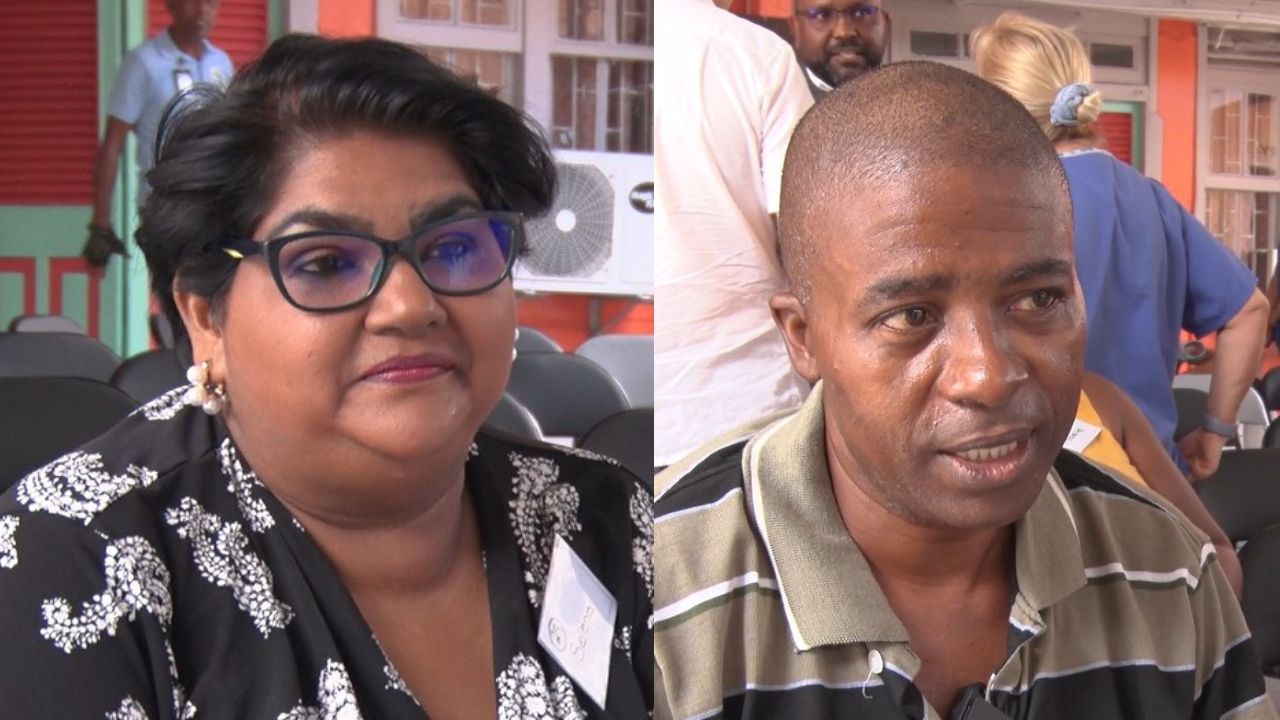
He said his journey with the prosthetic was frustrating at times, especially after he was told that he had to undergo training to use the support.
“The exercises, to me it wasn’t hard and like I said I have my mind poised to do it. I didn’t know they had all of this here. That was a plus for me,” Olutunde said.
He said this recent training helped him to improve his ability to walk up ramps and steps. He hopes to invent a type of technology that supports prosthetic users.
Meanwhile, Selena Ali has used prosthetics for 26 years since her right leg, from the knee to the foot, was amputated following a motor vehicular accident. Ali believes that because of her disability, she has to put in 110 per cent of the average person’s efforts and she is constantly trying to encourage other amputees to look at it as a glass-half-full situation.
“They give us another chance at life and it doesn’t stop at just giving us a limb, the physiotherapists do a great job in ensuring that we know how to use it properly.
“In Guyana, we are stigmatized for having a disability but like I say, we are no longer disabled, we are differently abled, we can work,” Ali said.
She works a full-time job, drives and does most of her daily activities.
She encourages people to remember that acceptance is key to regaining independence after amputation.

