
 Friday, June 5, 2026


 Friday, June 5, 2026


‘Big Tech’ not beyond reach – Nandlall says as gov’t moves to protect children online



As the government moves to regulate social media’s impact on children, Attorney General Anil Nandlall recently said pending litigation and court orders against tech giant, Meta, proves that Big Tech is not beyond the reach of Guyanese law.
Speaking at the consultation this week, Nandlall said for years, the conventional ideology was that you cannot sue a company like Meta in Guyana if Meta has no physical presence here. But according to Nandlall, this is no longer the case as globally, courts are hearing these matters.
“One time it was said that you can’t sue because they have no presence in Guyana. That is not so the courts across the regions have already decided that issue. In Guyana now we have pending litigation against Meta, we have obtained court orders against Meta, and they have a portal which you register the order on and they act upon the order,” Nandlall said.
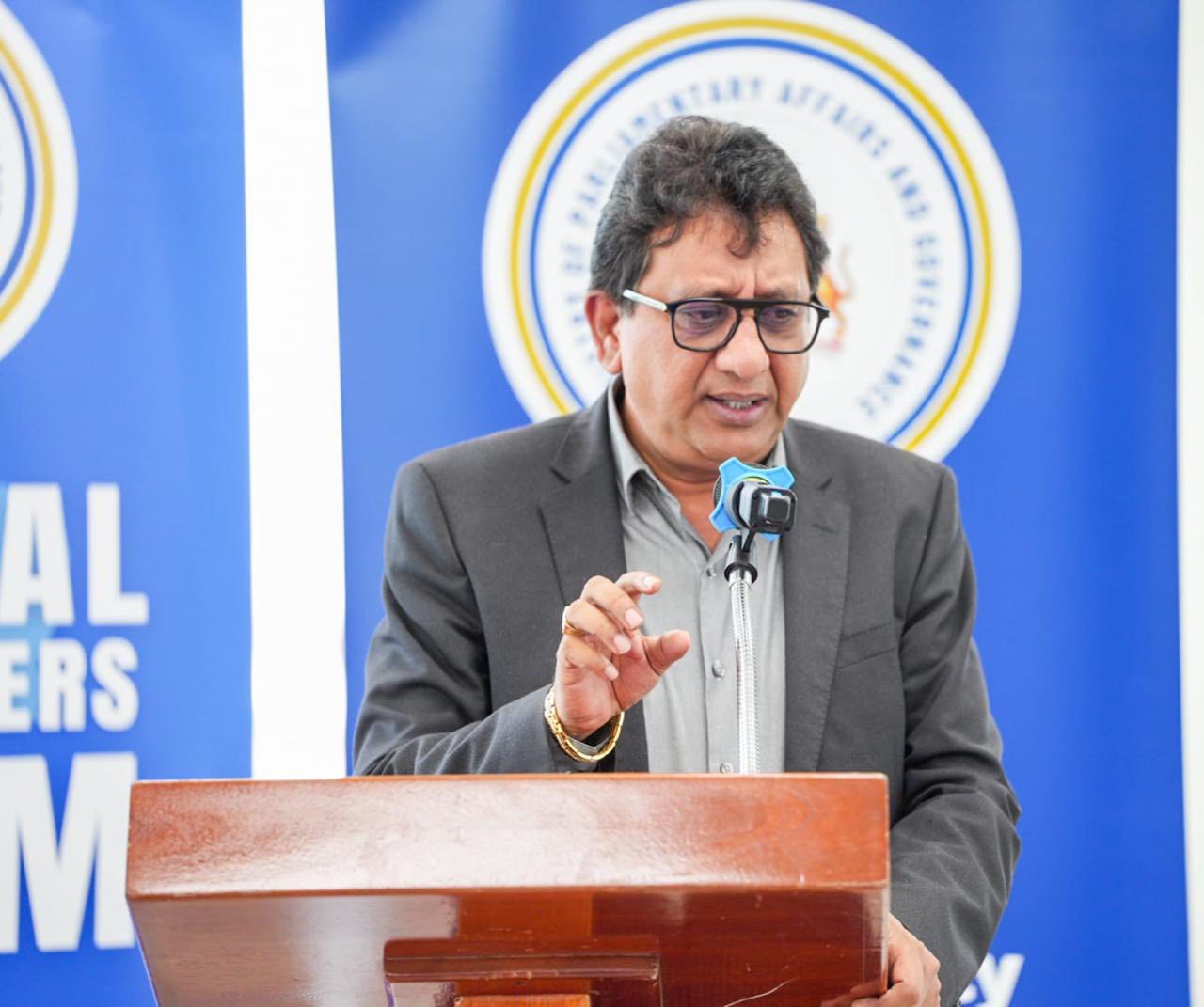
The disclosure came as Nandlall laid out the government’s broader case for why regulating cyberspace is no longer optional. According to Nandlall, the Meta litigation is not an endpoint but an example that the tools to hold digital platforms accountable already exist, even before comprehensive legislation is in place.
Guyana has commenced national consultation on the impact of social media on children. The aim is to create a regulation that will protect children while they surf the web and social media platforms.
Nandlall said Guyana has retained a UK-based firm to survey models that have worked internationally.
“We are following a tested blueprint. Today, all of you can gamble on your phone, if you go and gamble on the corner the police will lock you up. How do we regulate gamble on the telephone? You don’t even see [it]. That is the challenge,” he said.
He cited countries in Europe that have begun this exercise with great success. Once that analysis is complete, the government plans a wider consultative process drawing in lawyers, police, judges and social workers.
“When they give us the model, this engagement and the many more of this type we will bring in the legal profession, we will bring in the police, we will bring in the social people we will bring in the judges. Every important stakeholder will be consulted to produce a model that we think will be effective,” he said.
Nandlall said the ramifications are too profound for government to act alone on this matter.

