
 Monday, June 8, 2026


 Monday, June 8, 2026


Guyana avoids airport congestion challenges as air travel accelerates


By Kurt Campbell in Rio de Janeiro
As aviation leaders warn that overcrowded airports and rising taxes are threatening growth across Latin America and the Caribbean, Guyana appears better positioned than many regional counterparts to accommodate future increases in passenger traffic.
Speaking ahead of the International Air Transport Association (IATA’s) 82nd Annual General Meeting in Rio de Janeiro, Regional Vice President for the Americas Peter Cerdá identified major bottlenecks at airports including São Paulo, Mexico City, Bogotá, Lima and Cancún, where growing demand is straining available infrastructure.
Notably absent from that list was Guyana.
The distinction is significant as Guyana continues to experience rapid economic expansion and growing international connectivity driven by oil and gas development, tourism, business travel and trade.
Unlike many of the region’s busiest hubs, Guyana’s main gateway, Cheddi Jagan International Airport, is not classified as a Level 2 or Level 3 coordinated airport under the global slot management framework used by IATA to manage congestion at airports where demand exceeds available capacity. Airports requiring slot coordination are generally those facing significant congestion and operational constraints.

Industry airport data also indicates that slots are not currently required for operations at Cheddi Jagan International Airport, reflecting available capacity for future growth.
This places Guyana in a different category from many larger regional aviation markets where airlines face increasing difficulty securing arrival and departure slots.
Recent years have seen significant investment in Guyana’s aviation infrastructure, including the expansion and modernization of Cheddi Jagan International Airport, which serves as the country’s primary international gateway. The airport now features an extended runway, expanded terminal facilities and additional passenger handling capacity.
Although Guyana was not specifically mentioned among countries imposing new aviation fees, IATA’s broader warning may be particularly relevant as the country seeks to expand tourism and strengthen international connectivity.

Cerdá urged governments throughout the region to avoid introducing new taxes on air travel, arguing that higher costs ultimately reduce demand and discourage airlines from expanding service.
“Our message to governments throughout the region is very clear: no new taxes,” he said.
The aviation body also cautioned against environmental taxes that increase ticket prices without directly supporting sustainability initiatives.
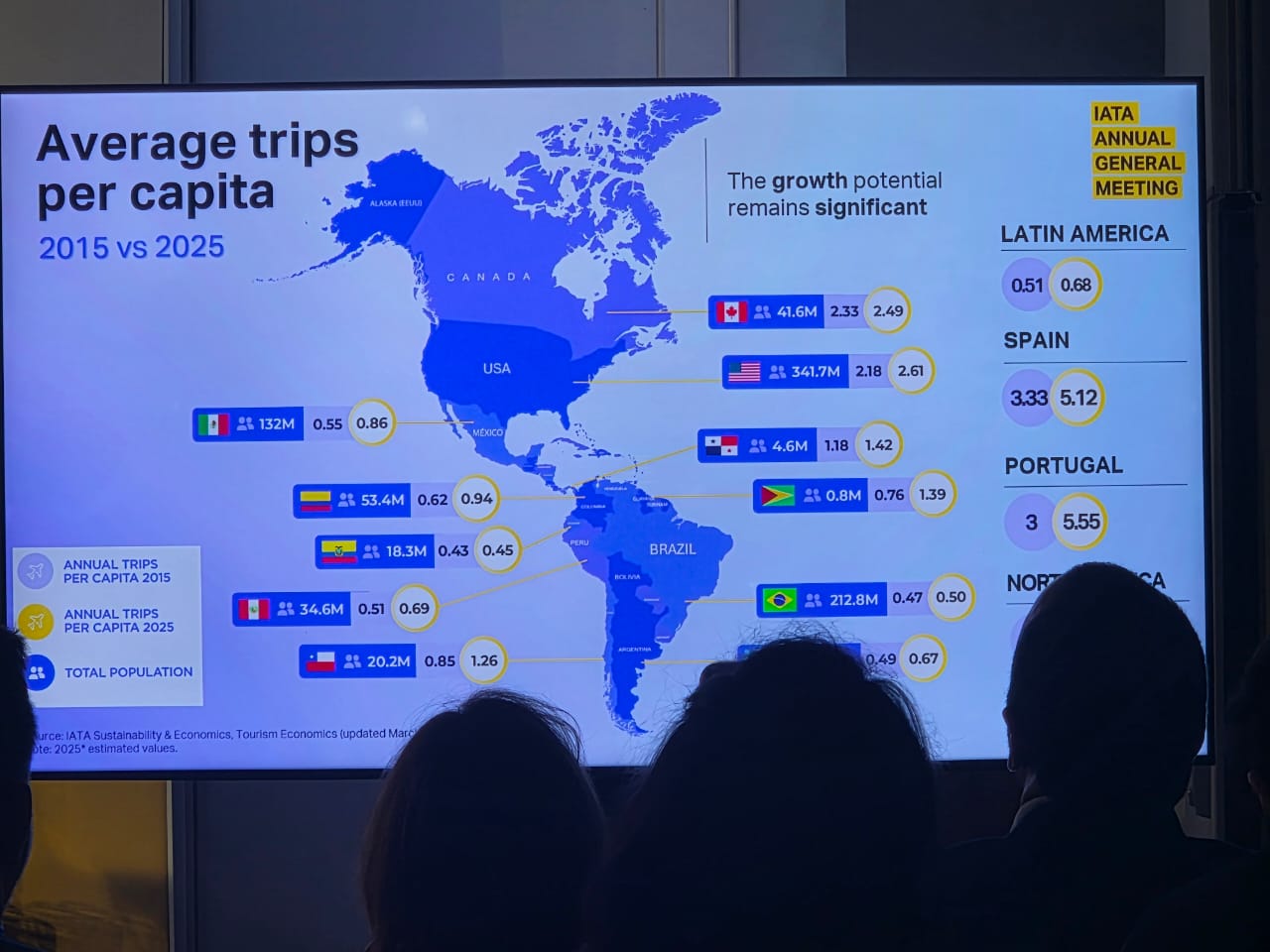
IATA expects air travel demand across Latin America and the Caribbean to grow by approximately 3.7 per cent annually through 2040.
For Guyana, which remains a relatively small aviation market compared with regional giants, that growth presents both opportunities and challenges.
Unlike many neighbouring countries now grappling with airport congestion, Guyana still has room to expand capacity and attract new airline services.
