
 Monday, June 8, 2026


 Monday, June 8, 2026


Ten hours fly time to Brazil: Will Guyana make the cut as Latam expands into the Caribbean?



By Kurt Campbell
Imagine flying north to go south.
Few places illustrate the Caribbean’s connectivity challenges better than Guyana.
Travelling from Georgetown to Rio de Janeiro this week for the 82nd Annual General Meeting of the International Air Transport Association (IATA), I found myself doing what many Guyanese travellers know all too well, flying in the opposite direction before heading to my final destination.
The journey required more than three hours north to Panama before turning south again for a roughly seven-hour flight to Brazil. By the time layovers were included, the trip stretched well beyond 14 hours and cost more than US$2,000.
It is a reality that has long frustrated Caribbean travellers and businesses alike. Yet comments from LATAM Airlines Group CEO Roberto Alvo on Saturday suggest the region remains firmly on the radar of Latin America’s largest airline.
Responding to a question on Caribbean connectivity during a media briefing in Rio de Janeiro on Saturday, Alvo said LATAM has spent the past decade steadily expanding its footprint across the Caribbean.
“About 10 years ago, we started a strategy to fly more into the Caribbean,” he explained.
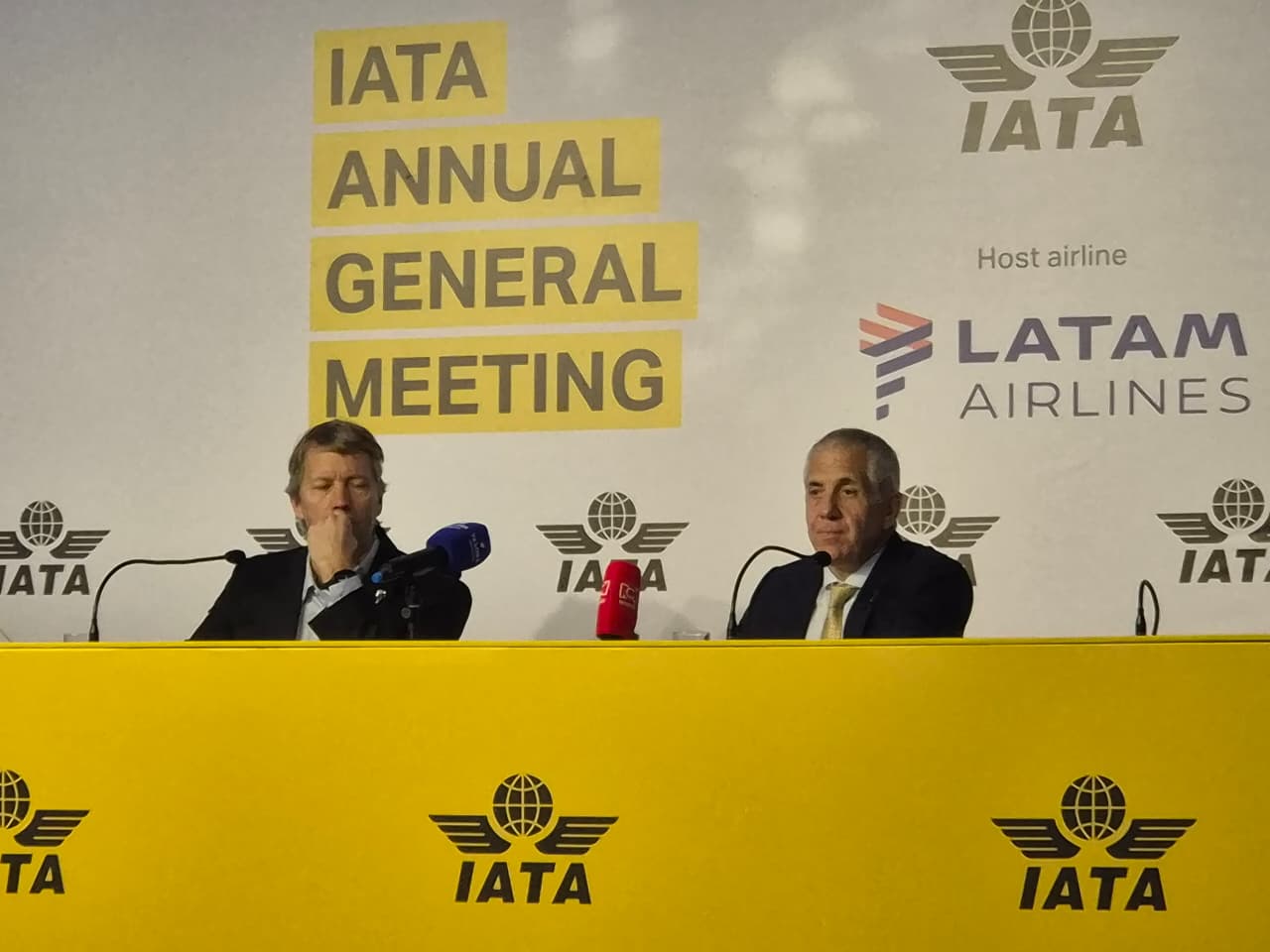
Today, LATAM serves destinations including the Dominican Republic, Aruba, Jamaica and parts of Central America, while noting it only recently suspended service to Havana.
More importantly for the region’s future, Alvo said the airline still sees “significant opportunity” for further Caribbean growth.
“We see significant opportunity in certain cities as we develop our network,” he stated.
For Guyanese travellers, those comments will inevitably reignite hopes that one day a direct connection between Georgetown and Brazil could become a reality.
For years, discussions have surfaced periodically about LATAM potentially entering the Guyanese market and establishing direct links to Brazil. Such a service would dramatically reduce travel times for tourists, businesses and government officials while strengthening ties with South America’s fastest-growing economies.

However, Alvo stopped short of announcing any new Caribbean destinations, and no mention was made of Guyana during Saturday’s briefing.
Instead, the LATAM chief identified another obstacle standing in the way of greater Caribbean-Latin America connectivity: Lima.
According to Alvo, Peru’s airport connection fee is making it more expensive to route passengers through the city, which he described as the most logical hub for connecting the Caribbean with South America’s southern markets.
“The best place to connect the Caribbean with the Southern Cone is actually Lima,” he said.
Many passengers travelling between Caribbean destinations and countries such as Chile, Argentina, Paraguay and Bolivia currently transit through Peru. But Alvo argued that connection charges of roughly US$25 round trip add costs that discourage growth.
But LATAM’s acknowledgement that it sees substantial opportunities in the Caribbean offers a reminder that the region remains part of the airline’s long-term plans.
